

Common Bacteria in Home Wells Signs, Health Risks, and Essential Water Tests

A well can look clean, taste normal, and still carry bacteria. Unlike public water systems, a home well is the owner’s responsibility, so routine testing is the only reliable way to know what is in the water.
Most bacteria found in wells are not dangerous by themselves. Some are nuisance organisms that cause stains, odors, slime, or clogged plumbing. Others signal that surface water, septic waste, animal waste, or soil runoff may be entering the well. That matters because harmful germs can travel with the same contamination.
This guide is informational and does not replace advice from a licensed well contractor, health department, or medical professional.

Why bacteria get into home wells
A properly built private well draws water from underground aquifers, where soil and rock naturally filter many contaminants. Problems start when bacteria find a pathway into the system.
Common entry points include:
A cracked or loose well cap
Floodwater flowing over the wellhead
A damaged casing or poor grout seal
Shallow groundwater after heavy rain
Nearby septic system problems
Animal waste, manure, or runoff near the well
Plumbing repairs that introduce contamination
Bacteria may also grow inside plumbing, pressure tanks, softeners, filters, or unused sections of pipe. That is why testing both the well source and the household plumbing can help identify where the problem starts.
Common bacteria found in home wells
Not every bacterial result means the same thing. Some bacteria point to a possible health concern. Others mainly create odor, slime, or water quality issues.
Bacteria type | What it may mean | Possible effects |
Total coliform | Surface water or environmental contamination may be entering the system | Usually used as a warning sign, not proof of illness risk |
E.coli | Fecal contamination from humans or animals may be present | Higher concern for stomach illness, especially for infants, older adults, and immune-compromised people |
Iron reducing bacteria | Iron and bacteria are reacting in the well or plumbing | Rust-colored slime, stains, clogged filters, metallic taste |
sulfur reducing bacteria | Bacteria are producing hydrogen sulfide gas | Rotten egg odor, black staining, corrosion concerns |
Heterotrophic bacteria | General bacterial growth in water or plumbing | May interfere with disinfection and indicate biofilm |
The key difference is risk. Iron and sulfur bacteria are often nuisance organisms. They can make water unpleasant and damage equipment, but they are not usually treated as direct disease indicators. Fecal indicators deserve faster attention because they can point to pathogens that are harder and more expensive to test for one by one.
Signs bacteria may be present in well water
Bacteria are microscopic, so many problems have no visible warning. Still, certain clues deserve attention.
Watch for these changes:
Rotten egg odor
Often linked to hydrogen sulfide gas, which can come from sulfur bacteria or certain groundwater conditions.
Rusty slime
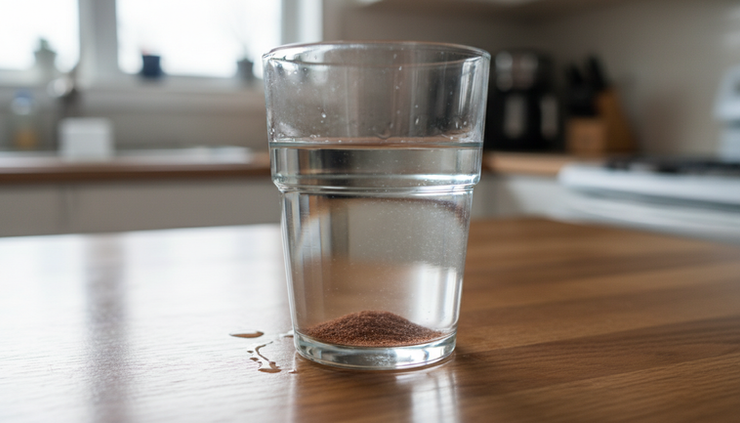
Orange, red, or brown slime in toilet tanks, filters, or drains may point to iron bacteria.
Black staining
Dark deposits around fixtures can appear when sulfur compounds or certain metals react in the water system.
Cloudy water after rain
Sudden cloudiness after storms may suggest surface water is reaching the well.
Sudden taste changes
Earthy, musty, metallic, or sour tastes may signal bacterial growth or chemistry changes.
Recurring clogged filters
Biofilm and bacterial slime can plug sediment filters, treatment equipment, and small plumbing openings.
Illness after drinking the water
Repeated stomach symptoms among people using the same water should prompt immediate testing and medical guidance.
Clear water is not proof of safety. Many bacteria that matter most do not change odor, taste, or appearance.
Indicator organisms explain what testing is really telling you
Water labs often test for indicator organisms instead of testing for every possible disease-causing microbe. This saves time and gives a practical warning system.
Indicator organisms are not always harmful themselves. Their value comes from what they suggest. If a lab finds bacteria associated with fecal contamination, a well may also be vulnerable to viruses, parasites, or other pathogens from the same source.
The most common bacterial indicators are:
Total coliform
These bacteria are found in soil, plants, surface water, and animal waste. A positive result means the well system is not fully protected from environmental contamination.
E. coli
This is a stronger warning sign because it is associated with fecal waste. A positive result should be treated seriously.
Fecal coliform
Some labs or agencies still use this category to help identify fecal contamination concerns.
A negative test is good news, but it is only a snapshot. Wells can change after storms, flooding, drought, nearby construction, septic work, or repairs to the water system.

Essential tests to order when troubleshooting a well
The right test depends on the symptom. A basic annual screen is useful, but troubleshooting needs a more targeted plan.
For routine safety, order:
Total coliform bacteria testing
Include total coliform bacteria and E. coli when checking drinking water safety.
Nitrate and nitrite
These are not bacteria, but they can point to septic, fertilizer, or runoff influence.
Basic water chemistry
pH, hardness, iron, manganese, sulfate, chloride, and total dissolved solids help explain staining, taste, corrosion, and treatment needs.
For odors, slime, or staining, add:
Iron bacteria testing
Useful when orange slime, fouled filters, or rusty deposits keep returning.
Sulfate and sulfide-related testing
Helpful when water smells like rotten eggs or causes black staining.
Heterotrophic plate count
Often called HPC, this estimates general bacterial growth and can help evaluate biofilm or treatment performance.
For repeated positive results, test at more than one location:
Raw water before treatment
Water after the pressure tank
Water after softeners or filters
A frequently used cold-water tap
This shows whether contamination comes from the well, the plumbing, or treatment equipment. A lab such as Environmental Labworks can help match sample bottles, holding times, and test methods to the issue being investigated.
What to do after a positive bacteria result
Do not ignore a confirmed positive result. Start by avoiding untreated water for drinking, ice, brushing teeth, and food prep until the risk is understood. Follow local health department guidance for temporary precautions.
Next, inspect the system. Look for a damaged cap, low well casing, poor drainage, nearby animal waste, recent flooding, or signs of septic trouble. If the well structure is damaged, shock chlorination alone may not solve the cause.
Shock chlorination can reduce bacteria inside the well and plumbing, but it should be done carefully. The water should be retested after the disinfectant has cleared. If bacteria return, the system needs further inspection, repairs, or treatment.

Safe well water depends on testing, not guessing
Bacteria in well water can mean anything from nuisance slime to a serious fecal contamination warning. Odors, stains, cloudiness, and clogged filters are useful clues, but they cannot confirm whether the water is safe.
A smart testing plan starts with bacterial indicators, then adds chemistry and nuisance bacteria tests based on the symptoms. Test at least once a year, and test again after flooding, repairs, nearby septic issues, or any sudden change in taste, odor, or appearance.
Clean-looking water is reassuring. Lab-tested water is better.


Comments